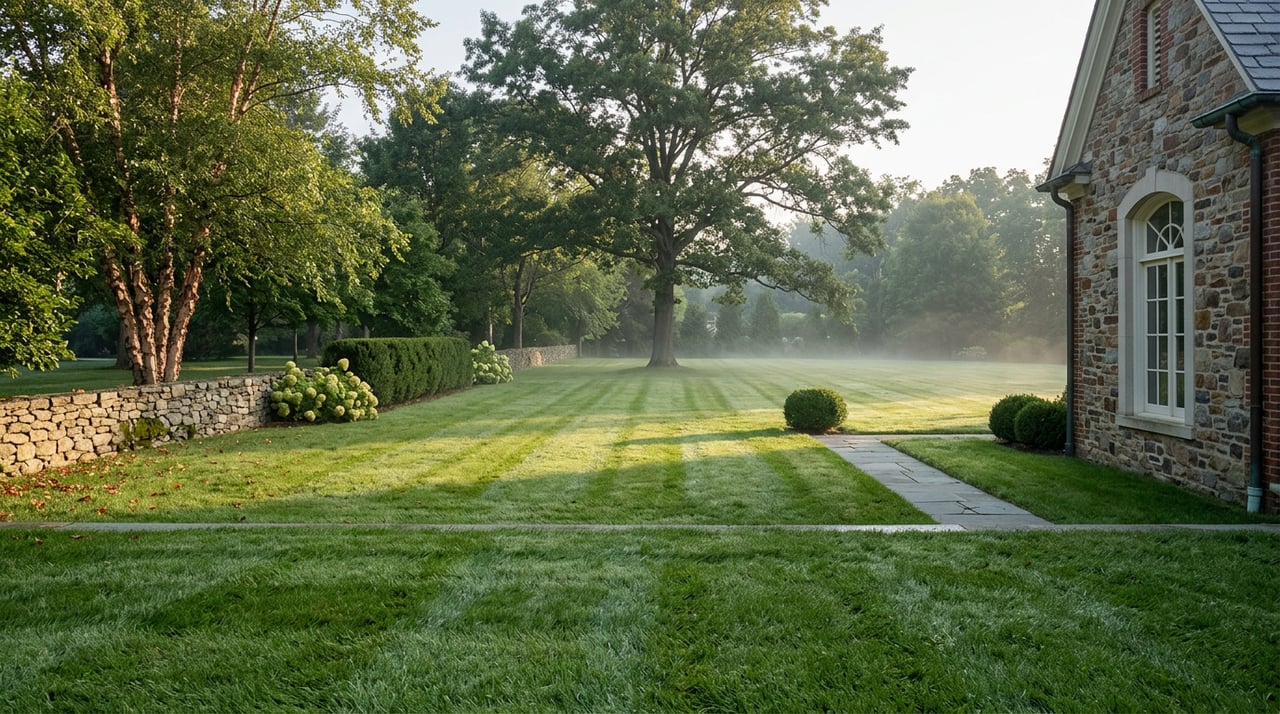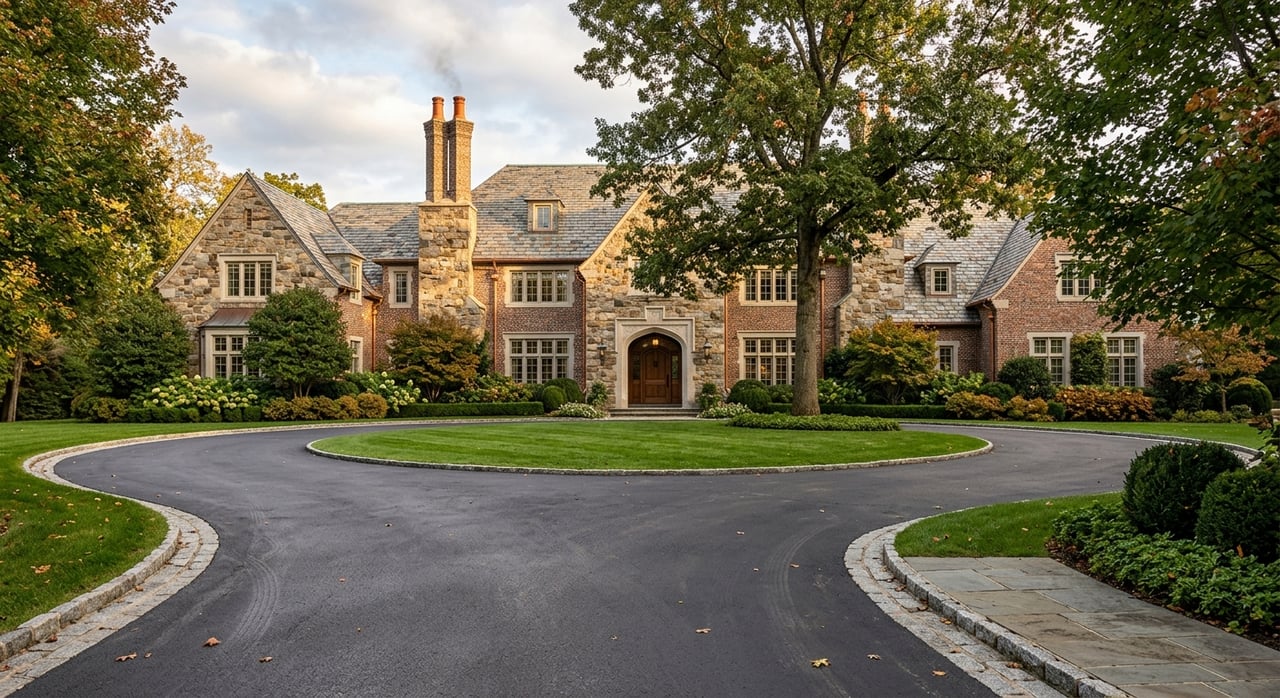
If you are looking at estate-scale property in Saddle River, raw acreage only tells part of the story. What gives these properties their lasting appeal is how the land can actually be used, improved, and preserved over time. When you understand the borough’s zoning framework, you can see why certain parcels hold value differently and why careful due diligence matters so much. Let’s dive in.
Why Saddle River Feels Like an Estate Market
Saddle River stands apart because its zoning is built to preserve low density, generous yard space, and mature natural surroundings. In the borough’s code, the R-1 and R-3 single-family districts are centered on minimum lot sizes of 87,120 square feet, or about 2 acres, while the R-2 district allows much smaller lots at 11,250 square feet.
That difference shapes the entire feel of the market. Instead of a tighter suburban pattern, much of Saddle River is defined by broad setbacks, limited lot coverage, and a built-in sense of separation between homes.
What “Estate-Scale” Really Means
In Saddle River, estate-scale does not just mean a large tax map parcel. It means a lot that can satisfy the borough’s dimensional rules while still leaving room for the home, driveway, outdoor features, and future improvements you may want.
For R-1 and R-3 lots, the current schedule sets a minimum lot area of 87,120 square feet, minimum frontage and lot width of 200 feet, maximum height of 35 feet or 2½ stories, and total improved lot coverage of 21%. Required yards are also substantial at 125 feet in the front, 40 feet on each side, and 50 feet in the rear.
Those numbers matter because they define the actual buildable envelope. A large parcel may look expansive on paper, but the usable area can narrow quickly once frontage, setbacks, and coverage limits are applied.
Frontage and street layout matter
Saddle River’s code measures the front yard from the center line of the street, not simply from the edge of pavement. On corner lots, front-yard requirements apply on both streets, and those lots must have 250 feet of frontage and lot width.
That can materially affect how a home sits on the property and how much flexibility you have for additions, accessory structures, or driveway placement. On estate parcels, these details often have a direct impact on both day-to-day function and long-term value.
Privacy Is Built Into the Land
One reason Saddle River properties feel private is that the zoning code intentionally protects open space. In the R-1 district, the borough requires a 25-foot nondisturbance area along each side and rear lot line where soil movement and tree removal are generally prohibited and structures are largely not allowed.
This means privacy is not only created by landscaping after the fact. It is supported by rules that preserve natural buffers and help maintain the borough’s established character.
The borough’s master plan re-examination also points to narrow, winding roads, scenic qualities, mature trees, and the prevention of clear-cutting as important planning priorities. For buyers who value quiet separation and a more natural setting, that planning framework is a meaningful part of the appeal.
Why Acreage Can Feel Smaller Than It Looks
A common mistake is assuming that two acres automatically gives you broad freedom to improve the property. In Saddle River, improved lot coverage is defined broadly and includes not just the main house, but also accessory buildings, driveways, pools, sports courts, decks, patios, cabanas, and parking areas.
Because of that, the functional capacity of a parcel can be more limited than its headline acreage suggests. A property may have strong visual scale while offering less room than expected for future amenities once all improvements are counted together.
What You May Be Able to Add Later
Large residential lots in Saddle River can support a range of accessory improvements. The code permits uses and structures that can include private stables, pool houses or cabanas, tennis field houses, gazebos, and private storage facilities.
For buyers thinking long term, that flexibility is important. It creates the potential to shape the property around your lifestyle, provided the lot can accommodate those additions within the applicable zoning limits.
Limits on accessory buildings
The same code places real boundaries around future improvements. Most residential lots are limited to three accessory buildings, with an exception for properties of five acres or more that qualify under the farmland assessment act.
Each accessory building is capped at 1,000 square feet and 17 feet in height. Accessory structures also may not sit in front of the principal building, may not encroach on required front or rear yards, and on single-family lots may only encroach into one side yard up to the minimum side-yard requirement.
In the R-1 and R-3 districts, that side-yard minimum is 40 feet. For buyers evaluating future plans, those rules can significantly shape what is realistic.
Equestrian use on larger holdings
Horses are also part of the conversation on some larger parcels. The borough allows one horse per acre, or two miniature horses per acre, which can make equestrian use a real consideration on estate-scale land.
That does not mean every large parcel is equally suited for it. Layout, access, setbacks, and the overall site plan still matter, but the code does create a framework where this use can be relevant.
Access Can Affect Future Value
Driveway and entry planning can be more important than many buyers expect. Saddle River allows one curb cut for a residential lot unless the property has 200 feet or more of frontage, in which case a second curb cut is permitted.
On a large property, that can influence circulation, privacy, and the placement of future improvements. A parcel with stronger frontage may offer more flexibility than another lot with similar acreage but less practical access.
Redevelopment Is Usually Not the Real Story
When buyers see significant land area, they sometimes assume the upside lies in major redevelopment. In Saddle River, that is usually not the default path.
The borough’s Planned Unit Development zone requires 25 or more contiguous acres, and the code and master plan make clear that ordinary single-family districts remain the governing framework for most residential land. In practical terms, the long-term value of estate property is usually tied more to scarcity, privacy, and carefully bounded improvement potential than to large-scale redevelopment.
Why Parcel History Matters
In Saddle River, parcel history can be just as important as parcel size. The zoning code allows only one principal building per lot, and if multiple recorded parcels are used together for one principal building and its required yards, the combined land is treated as one lot for zoning purposes.
That means a property made up of several lots on a tax map may not function the way a buyer first assumes. Survey review, deed review, and parcel-merger analysis are essential before drawing conclusions about future buildability or separate use.
Older lots may have special status
Some older properties may carry grandfathered rights. Saddle River’s nonconforming-lot provision says that an R-1 or R-2 lot shown as a separate lot on the tax assessment map before the ordinance’s effective date may still be used for a permitted use if it has not since been merged with other property and does not violate other bulk rules.
The code also preserves certain rights for preexisting nonconforming buildings. For the right property, that history can influence both present use and long-term strategy.
Land Value Also Depends on Site Conditions
Not every estate parcel delivers the same value simply because the acreage matches. On river-adjacent or low-lying properties, Saddle River’s re-examination report identifies flooding, streambank erosion, and culvert capacity as local concerns.
That makes topography, drainage, and potential soil-disturbance costs a real part of the analysis. If you are planning additions, site work, or reconfiguration over time, these factors can affect feasibility, timing, and cost.
How to Evaluate Long-Term Value
In Saddle River, long-term value is often strongest when several elements align at once. The best estate parcels are usually the ones where lot size, frontage, access, disturbance limits, and improvement capacity work together without undermining privacy or usability.
When you evaluate a property, it helps to focus on questions like these:
- How much of the lot is truly buildable after setbacks and nondisturbance areas are applied?
- How much improved lot coverage remains for future amenities?
- Does frontage support practical driveway access or a second curb cut?
- Have separate parcels been functionally merged for zoning purposes?
- Are there any nonconforming rights that may add flexibility?
- Do drainage, flooding, or erosion concerns affect future plans?
These are the details that separate a property that only looks impressive from one that offers lasting utility and value.
Why Experienced Guidance Matters
Estate property in Saddle River requires more than a standard square-foot and lot-size review. Buyers and sellers benefit most from a clear understanding of the true buildable envelope, the limits on accessory uses, site access constraints, and the approval path for future improvements.
That is where strong local advisory work adds leverage. A thoughtful review of zoning, parcel history, and site conditions can help you avoid costly assumptions and make decisions with greater confidence.
If you are considering buying or selling estate-scale property in Saddle River, working with a team that understands both luxury positioning and land-level analysis can make a meaningful difference. To schedule a white-glove consultation, connect with Christian Di Stasio.
FAQs
What makes a property estate-scale in Saddle River?
- In Saddle River, estate-scale usually refers to properties in districts like R-1 and R-3 where minimum lot size is 87,120 square feet, or about 2 acres, along with substantial frontage, setback, and coverage requirements.
How does zoning affect privacy on Saddle River properties?
- Privacy is shaped by large minimum lots, wide yard requirements, and in the R-1 district, 25-foot nondisturbance areas along side and rear lot lines that help preserve natural buffers.
Can you add a pool house or stable on a Saddle River estate property?
- Potentially, yes. The code permits certain accessory improvements such as pool houses, cabanas, private stables, gazebos, and storage facilities, but they must still comply with limits on number, size, height, placement, and lot coverage.
Why does frontage matter for a Saddle River estate lot?
- Frontage affects how the property can be accessed and laid out. It can also determine whether a second curb cut is permitted, which may influence driveway design and long-term functionality.
Do multiple lots always mean more buildable potential in Saddle River?
- No. If multiple recorded parcels are used together for one principal building and its required yards, the borough treats the combined land as one lot for zoning purposes, so tax map size alone may not reflect actual development flexibility.
Are all large Saddle River lots equal in long-term value?
- No. Long-term value often depends on a mix of factors including buildable area, frontage, access, disturbance limits, parcel history, and site conditions such as drainage or flooding concerns.