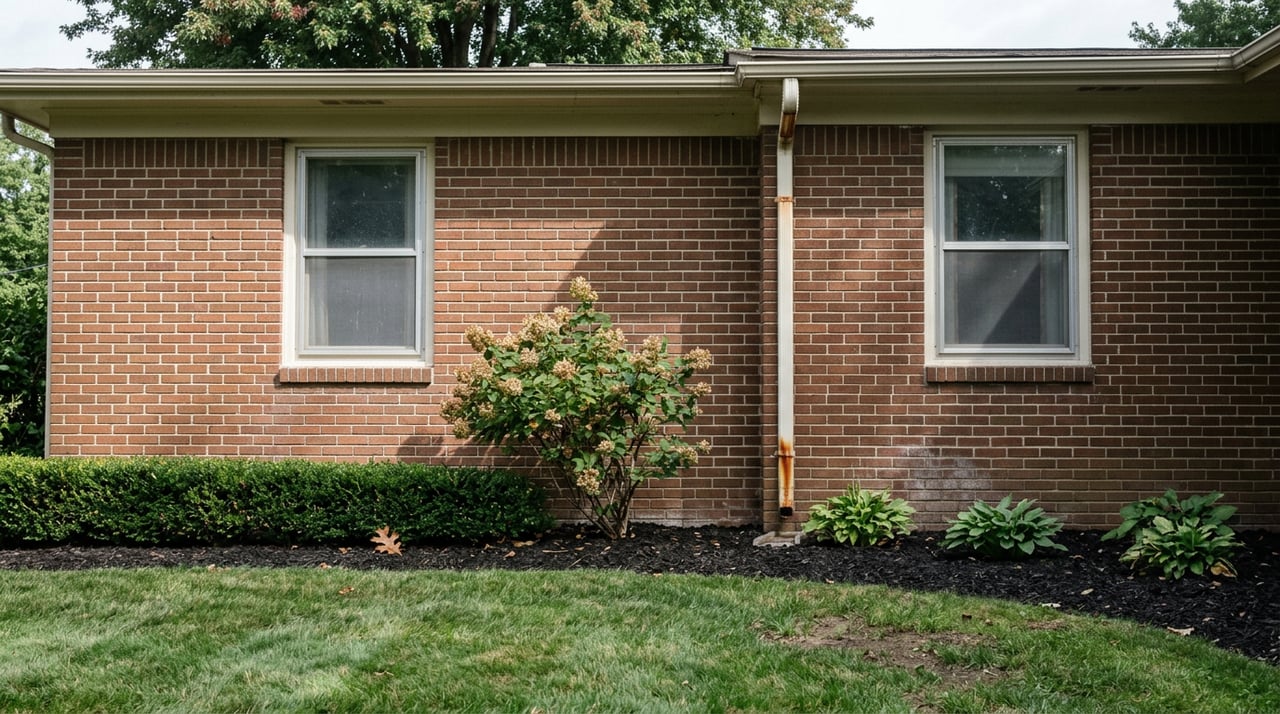
Paramus didn't grow the way most towns grow. It exploded. In 1948 the borough had roughly 6,000 residents. Ten years later it had nearly 23,000, a boom fueled by the completion of the Garden State Parkway and the widening of Routes 4 and 17, which put this stretch of Bergen County within easy reach of the George Washington Bridge. The Wall Street Journal would later call the result "quintessentially suburban," but the more useful fact for anyone selling here in 2026 is a quieter one: an enormous share of Paramus's housing stock was built in that same narrow window, when oil heat and buried steel tanks were standard equipment in nearly every new home.
That's not a historical footnote. It's the reason so many Paramus sellers get an unwelcome surprise during attorney review, decades after they thought the question was settled.
The math nobody runs before listing
Homeowners in Paramus tend to assume that if their house doesn't have an oil tank problem, it simply doesn't have one. But the age math works against that assumption more often here than in newer suburbs. Bergen County environmental firm ATS Environmental, which performs tank sweeps across the county including Paramus and neighboring Saddle River, puts it plainly: if a home was built before 1975, there's a good chance a tank is present somewhere on the property, whether anyone currently living there knows it or not.
Paramus's own development timeline lines up almost exactly with that risk window. The borough's population nearly quadrupled between 1948 and 1958, and Garden State Plaza and the Bergen Mall, now Bergen Town Center, opened in 1957 and 1958 respectively, right in the middle of the residential building boom that filled in the streets around them. A house built in 1954 to house a family drawn by the new mall jobs is now 72 years old. Its original oil tank, if it was ever removed, may or may not have documentation to prove it.
That's the mechanism worth understanding before you list: this isn't a rare inspection fluke. It's a structural feature of Paramus's housing stock, sized to match the scale of the town's own growth spurt.
What actually happens when a tank turns up
An underground tank rarely announces itself during the listing photos. It shows up during a buyer's inspection, or when a title search turns up an old fuel oil delivery record, or when someone notices a capped fill pipe near the foundation, typically two to four inches in diameter, left over from the days when a delivery truck topped off the tank every winter. By the time it surfaces, you're usually past the point where you have full control of the timeline.
As Curbelo Law notes, New Jersey law does not require every homeowner to remove a tank before selling, and there are currently no regulations prohibiting the purchase or sale of a home with an underground oil tank in New Jersey. What the law does require is disclosure. A seller has to note the presence of any underground storage tank, active, inactive, or abandoned in place, on the state's Property Disclosure Statement.
The complication is that some tanks were left in place, typically by filling them with sand or foam rather than digging them out. According to Oil Tank Removal NJ, that approach doesn't satisfy most lenders anymore. FHA loans explicitly require the underground tank issue to be resolved before closing, and many conventional lenders won't approve a mortgage at all if a tank is known to exist without proper closure documentation. If your buyer needs financing, and most do, an undocumented tank can stall the deal at the exact moment both sides thought they were headed to the closing table.
What it costs, and why the range is so wide
Contractors licensed in New Jersey publish fairly consistent 2026 pricing for straightforward jobs, but the range widens fast once contamination enters the picture.
| Scenario | Typical cost range |
|---|---|
| Above-ground tank removal | $400 to $1,800 |
| Underground tank removal, no contamination found | Roughly $1,000 to $4,500, depending on tank size, depth, and access |
| Remediation after contamination is discovered | $3,000 to $17,000 in most cases |
Those numbers come from licensed removal contractors' published 2026 rates, and they assume a fairly routine job: permits pulled, a licensed contractor on site, soil samples taken, backfill completed. NJDEP data cited by industry sources puts the number higher than most sellers expect: over 60 percent of underground tank removals in New Jersey reveal some level of soil contamination once the digging starts, which is why smart sellers treat the clean-removal estimate as a floor, not a ceiling. In the rare severe case, where oil has reached groundwater, cleanup costs have been reported climbing into six figures.
There is state assistance in theory. New Jersey's Petroleum Underground Storage Tank Remediation, Upgrade and Closure Fund offers grants and loans for eligible homeowners dealing with a leaking tank. In practice, the fund's own page currently describes roughly a one-year wait just to have a new application reviewed. That's a fund built for homeowners who can wait. It isn't built for someone thirty days from a closing date.
Why the timing decides who has leverage
This is the part that gets missed in most generic advice about oil tanks. The cost of the tank itself is rarely what damages a deal. What damages a deal is discovering the tank on the buyer's schedule instead of yours.
If a tank surfaces during a home inspection, the buyer's attorney now has a documented issue to negotiate around during attorney review, and the leverage shifts. You may be asked to escrow funds, drop the price, or delay closing while a licensed contractor and an NJDEP-certified closure professional complete a process that commonly takes two to four weeks even when nothing goes wrong. If contamination turns up, that timeline extends further, and a buyer with a rate lock expiring or a lease ending somewhere else may simply walk.
Compare that to finding out on your own terms, months before listing. A tank sweep from a Bergen County firm gives you a documented answer while you still control the calendar. If nothing is found, you list with a clean disclosure and one less question for buyers to ask. If something is found, you decide whether to remove it before listing, price around it, or address it as a known, quantified item rather than a live negotiation during attorney review. Firms like TADCO Solutions and ATS Environmental both market this work specifically to Paramus and the rest of Bergen County, using scanning equipment to locate a tank rather than relying on guesswork or old paperwork.
What this means if you're buying, not selling
The same math applies in reverse for buyers looking at Paramus homes from that 1950s and 60s construction wave. A missing basement furnace conversion, an older heating system, or a capped pipe near the foundation are all worth asking about directly rather than assuming the seller's disclosure form tells the whole story. If you're under contract on a home built before the mid-1970s and the disclosure form is vague on this point, a tank sweep before your inspection contingency expires is a reasonable ask.
A few direct questions
Could a buyer's lender still require an oil tank issue to be resolved? A buyer's lender may have its own requirements.
Will my homeowners insurance cover a leak if one is found? Most standard New Jersey homeowners policies do not cover oil tank leaks or the resulting cleanup. Some carriers offer a separate oil tank endorsement, which is worth a call to your agent before you list, not after an inspector finds a problem.
What if I genuinely don't know whether my home has a tank? That's common enough in Paramus that it isn't a red flag by itself. A licensed sweep is the only reliable way to answer the question, and doing it before you list means you find out on a timeline you control.
Paramus's postwar boom built a lot of what makes the town work today, from its shopping corridors to its close-in commute. It also buried a line item that's easy to forget about until a transaction forces the question. If you're weighing a sale in Paramus and want a clear-eyed read on how a property's age and history might affect your timeline and pricing strategy, Christian Di Stasio can walk through what to check before you list. Schedule a white-glove consultation and get answers before a buyer's attorney finds the question for you.
This article is general information, not legal, tax or financial advice. Consult a qualified professional about your situation.